
Living in a Social World
Psy 324: Advanced Social Psychology
Fall, 1996
Miami University
News from a Social Psychology Perspective
October 27, 1996
With
the upcoming elections being one of the most debated topics, our research focused
primarily on how people perceive the presidential candidates. The motivation behind voting
and party affiliation offers much for social psychologists to analyze.
First of all, many people have begun to debate the importance of character
versus campaigning for particular issues. This
character debate has produced some very interesting results, which in turn, will have
serious implications on the American people. Recent polling statistics show that character
is not necessarily the relevant factor that will determine a candidate's strengths or
weaknesses (MSNBC). As part of the attributional equation which equates a person's total
behavior in terms of the situation and someone's own pre- dispositions, it can be
determined that the majority of the public is dis- counting actions of the candidates by
subtracting situational forces from their behavior. In effect, such an equation enables
the candidates' behavior to be minimized in order to focus more attention on the political
issues at hand.
campaigning for particular issues. This
character debate has produced some very interesting results, which in turn, will have
serious implications on the American people. Recent polling statistics show that character
is not necessarily the relevant factor that will determine a candidate's strengths or
weaknesses (MSNBC). As part of the attributional equation which equates a person's total
behavior in terms of the situation and someone's own pre- dispositions, it can be
determined that the majority of the public is dis- counting actions of the candidates by
subtracting situational forces from their behavior. In effect, such an equation enables
the candidates' behavior to be minimized in order to focus more attention on the political
issues at hand.
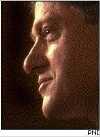 Another theory to consider in
determining the apparent "likeability" of the presidential candidates is the
negativity bias, which simply states that character weaknesses or flaws are more important
than strengths in people's evaluations of the candidate (Klein, 1991). Basically, any
negative information pertaining to a particular candidate will weigh more heavily in a
voter's mind on election day. The negativity bias can also be
Another theory to consider in
determining the apparent "likeability" of the presidential candidates is the
negativity bias, which simply states that character weaknesses or flaws are more important
than strengths in people's evaluations of the candidate (Klein, 1991). Basically, any
negative information pertaining to a particular candidate will weigh more heavily in a
voter's mind on election day. The negativity bias can also be 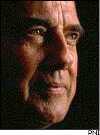 explained in terms of the correspondence
inference theory which suggests that any behavior that is not consistent with social norms
is determined to be indicative of one's true personality (Klein, 1991). Thus, for Dole,
who wants to terminate the role of education in the Cabinet, people are going to pay
attention to that specific action because it deviates from the norm of a society that
places a great deal of value on the advancement of education.
explained in terms of the correspondence
inference theory which suggests that any behavior that is not consistent with social norms
is determined to be indicative of one's true personality (Klein, 1991). Thus, for Dole,
who wants to terminate the role of education in the Cabinet, people are going to pay
attention to that specific action because it deviates from the norm of a society that
places a great deal of value on the advancement of education.
A final determinant of political attitudes has to do with the ultimate attribution error which states that people tend to blame flaws within their own party on the situation of their candidate, whereas the flaws of the other candidate are blamed on the person. This would alleviate any apparent inconsistencies within one's own choice of candidate promoting more loyalty to that candidate.
In conclusion, this study was performed in order to determine the reasons behind political views and what factors might promote a particular preference. With the 1996 election so close, individuals need to realize the role that certain attributional theories contribute to the ultimate vote. Finally, this study provides the information is imperative to making an responsible vote that is not propelled by mere mud-slinging, or non-issue oriented debates.
Gilbert, Daniel (1995). Attribution and Interpersonal Perception. In A. Tesser (Ed.), Advanced Social Psychology. McGraw-Hill, Inc., New York.
Klein, Jill.(1991). Negativity effects in impression formation: A test in the political arena. Personality and Social Psychology Bulletin.
Back to Top
Back To Psy 324
Home Page
Social Psychology / Miami University (Ohio USA)
. Last revised: . This document has been accessed 376 + times since 1 June 1996. Comments & Questions to R. Sherman