
Living in a
Social World
Psy 324: Advanced Social Psychology
Fall, 1996
Miami University
News from a Social Psychology Perspective
 Analysis by
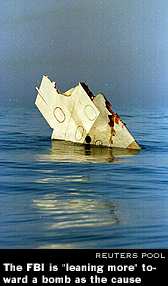
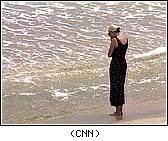
This News Analysis focused on the TWA Flight 800 crash and its social psychological aspects. In particular, our group focused on counterfactual thinking in relation to public reaction to the accident. Counterfactual thinking can be defined as a cognitive process in which one reviews alternative events that could have affected the present in some way. An example of this would be alternative circumstances that would have prevented the fate of a passenger on Flight 800 (maybe their car ran out of gas on the way to the airport).
 Counterfactual thinking is apparently affected by numerous variables. There is
a positive correlation between the strength of the reaction to an outcome and the greater
availability of imagined alternatives. Also, observers tend to sympathize with a victim
involved in an outcome that strongly evoked positive, alternatives (Miller and McFarland,
1986). In another study, subjects were less likely to mutate an event through
counterfactual thinking if it was considered to be normal rather than exceptional
(example: death by natural causes as opposed to a bomb explosion). Also, when there were
multiple, consecutive events that caused a certain outcome, subjects chose only to
Counterfactual thinking is apparently affected by numerous variables. There is
a positive correlation between the strength of the reaction to an outcome and the greater
availability of imagined alternatives. Also, observers tend to sympathize with a victim
involved in an outcome that strongly evoked positive, alternatives (Miller and McFarland,
1986). In another study, subjects were less likely to mutate an event through
counterfactual thinking if it was considered to be normal rather than exceptional
(example: death by natural causes as opposed to a bomb explosion). Also, when there were
multiple, consecutive events that caused a certain outcome, subjects chose only to 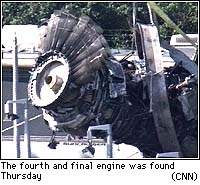 mutate the first one. This was presumably
because the other three events were dependent on previous ones (Wells, Taylor and Turtle,
1987). There is an apparent link between unusual circumstances surrounding an event and
emotional amplitude towards the victim (Williams).
mutate the first one. This was presumably
because the other three events were dependent on previous ones (Wells, Taylor and Turtle,
1987). There is an apparent link between unusual circumstances surrounding an event and
emotional amplitude towards the victim (Williams).
Our group gathered information concerning the passengers of Flight 800 (lists, individual memorials and biographies) off the Internet and linked them to the Living in a Social World site. The purpose of this was to facilitate counterfactual thinking by Psychology 324 class members, providing them with in-depth information about the passengers and evoking an emotional response. In general, counterfactual thinking seems to vary in level among individuals' everyday lives, but is an inevitable response to an out-of-the-ordinary event.
Back to Top
Back To Psy 324
Home Page
Social Psychology / Miami University (Ohio USA)
. Last revised: . This document has been accessed 470 + times since 1 June 1996. Comments & Questions to R. Sherman