Psy 324: Advanced Social Psychology
Miami University

Living in a Social World
Psy 324: Advanced Social Psychology
Miami University
Health and Society: Big Government Versus Big Tobacco Industry, April 1998. Analysis by Seth Hall, William Kramer, John Neal, & Jamie Schlabach
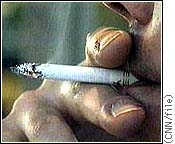 As
of late, both the tobacco industry and the government have taken center stage in a debate
over the proposed regulation of the tobacco industry. The outcome will certainly affect
the general public in more ways then one. We found several social psychological issues
relating to this issue. We will look into the concept of framing as seen by the two most
outspoken people on the issue, Senator McCain and
As
of late, both the tobacco industry and the government have taken center stage in a debate
over the proposed regulation of the tobacco industry. The outcome will certainly affect
the general public in more ways then one. We found several social psychological issues
relating to this issue. We will look into the concept of framing as seen by the two most
outspoken people on the issue, Senator McCain and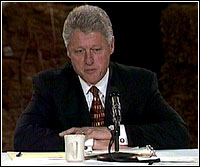 Chairman Steven Goldstone of RJR
Nabisco. In particular, the speech given by Mr. Goldstone shows many instances of counterfactual thinking which will
be explored. Also, the presidential icon represents authority in this issue with President Clinton being very
involved. We will explore the use of the office as an authority of compliance. The
government's compelling interest is to curve the growth of adolescence smoking, especially
through advertising since the tobacco industry gears it's ads to this age group.
Subsequently, we will look at some of the social impact theories of why young people smoke
in the first place. Programs such as Dare
have been implemented to teach children of the dangers of smoking.
Chairman Steven Goldstone of RJR
Nabisco. In particular, the speech given by Mr. Goldstone shows many instances of counterfactual thinking which will
be explored. Also, the presidential icon represents authority in this issue with President Clinton being very
involved. We will explore the use of the office as an authority of compliance. The
government's compelling interest is to curve the growth of adolescence smoking, especially
through advertising since the tobacco industry gears it's ads to this age group.
Subsequently, we will look at some of the social impact theories of why young people smoke
in the first place. Programs such as Dare
have been implemented to teach children of the dangers of smoking.
*Click Here For The Team's Summary Analysis *
Back to Top
Back To Psy 324 Home Page
Aggression & Violence in Schools: The Arkansas Shootings, March 24th, 1998. Analysis by Julie Bollmer, Sascha Hansen & Chris Hendricks
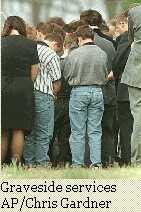 On March 24, 1998 a tragic shooting occurred at Westside Middle School in Jonesboro, Arkansas (see map
for details of scene). Two boys ages 11 and 13 were arrested and
charged with the shooting deaths of four classmates and one teacher and injuries to
several
On March 24, 1998 a tragic shooting occurred at Westside Middle School in Jonesboro, Arkansas (see map
for details of scene). Two boys ages 11 and 13 were arrested and
charged with the shooting deaths of four classmates and one teacher and injuries to
several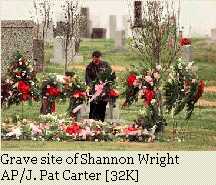 others. This incident
continues to display the disturbing trend of shootings
in schools as well as other acts of violence and aggression in educational settings. This incident raises the question of attribution
and who is to blame for such actions. From this tragedy came and amazing story of altruism
when a teacher, Shannon Wright, took a bullet in order to save the
life of one of her students.
others. This incident
continues to display the disturbing trend of shootings
in schools as well as other acts of violence and aggression in educational settings. This incident raises the question of attribution
and who is to blame for such actions. From this tragedy came and amazing story of altruism
when a teacher, Shannon Wright, took a bullet in order to save the
life of one of her students.
*Click Here For The Team's Summary Analysis *
Back to Top
Back To Psy 324 Home Page
Aggression
in Sports: The Case
of Latrell Sprewell
Analysis by Jonathan Batt, Nathan Brown,
Michael Perry & Merritt Posten
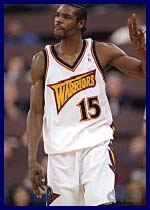
In early December 1997*, professional basketball player
Latrell  Sprewell
of the Golden State Warriors physically assaulted and threatened to kill his coach, P.J.
Carlesimo. As a result, the Warriors voided his multi-million dollar contract; then, the
NBA suspended him for an entire year, the harshest non-drug-related penalty ever dealt.
Sprewell's hope for a lessening of the penalty came to fruition this month when an
arbitrator ruled that his contract had to be reinstated and the suspension reduced. For a
CNN/Sports Illustrated commentary on the event, click HERE. There are some interesting links on this page you might want to
check out. Sprewell gives his side of the story HERE. On this page, you can listen to a
Sprewell
of the Golden State Warriors physically assaulted and threatened to kill his coach, P.J.
Carlesimo. As a result, the Warriors voided his multi-million dollar contract; then, the
NBA suspended him for an entire year, the harshest non-drug-related penalty ever dealt.
Sprewell's hope for a lessening of the penalty came to fruition this month when an
arbitrator ruled that his contract had to be reinstated and the suspension reduced. For a
CNN/Sports Illustrated commentary on the event, click HERE. There are some interesting links on this page you might want to
check out. Sprewell gives his side of the story HERE. On this page, you can listen to a RealAudio statement of Sprewell's. To see some fans' reactions to the event click HERE, it's a transcript
  of a talk show. Among the numerous
social psychological concepts that can be seen in this event, we plan to discuss
aggression, attribution in people's perceptions of the event, and the differences in the
norms or standards that apply to celebrities versus those that apply to ordinary people.
Click HERE to explore the APA's definition and recommendations concerning anger
management. (link to ) Additionally, a major concern of Sprewell's is that he will forever
bear the stigma of an insubordinate and aggressive player. To get a view of some recent
research in stigma, click HERE. *Less
than a year later, in the summer of 1998, Sprewell was again in the news.
of a talk show. Among the numerous
social psychological concepts that can be seen in this event, we plan to discuss
aggression, attribution in people's perceptions of the event, and the differences in the
norms or standards that apply to celebrities versus those that apply to ordinary people.
Click HERE to explore the APA's definition and recommendations concerning anger
management. (link to ) Additionally, a major concern of Sprewell's is that he will forever
bear the stigma of an insubordinate and aggressive player. To get a view of some recent
research in stigma, click HERE. *Less
than a year later, in the summer of 1998, Sprewell was again in the news.
*Click Here For The Team's Summary Analysis *
Back to Top
Back To Psy 324 Home Page
President
Clinton Accused of White 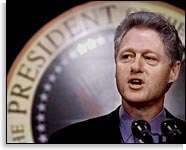 House Affair: Sex,
Power, and the Presidency
House Affair: Sex,
Power, and the Presidency
Analysis by
Liz Carmona, Riki Evans, Shyla Gorman, & Dawn Olson
 President Clinton is accused of having an affair with white house
intern Monica
Lewinsky. The public has formed attitudes
about the white
house crisis possibly resulting
President Clinton is accused of having an affair with white house
intern Monica
Lewinsky. The public has formed attitudes
about the white
house crisis possibly resulting from cognitive dissonance. This possibility
has even been depicted in media humor.
Hillary has exhibited biased processing and motivated reasoning by announcing that she
believes the scandal to be solely the result of a right wing conspiracy and by vocalizing
her intent to
support her husband. In group and out group bias is
evident not only in Hillary's accusations, but also in the views expressed by opposing parties.
Tall poppy theory, the idea that the higher amount of achievement a person
accomplishes the more people enjoy watching them fall, is evident in the mass
quantity of press dedicated to this scandal versus other important
affairs.
from cognitive dissonance. This possibility
has even been depicted in media humor.
Hillary has exhibited biased processing and motivated reasoning by announcing that she
believes the scandal to be solely the result of a right wing conspiracy and by vocalizing
her intent to
support her husband. In group and out group bias is
evident not only in Hillary's accusations, but also in the views expressed by opposing parties.
Tall poppy theory, the idea that the higher amount of achievement a person
accomplishes the more people enjoy watching them fall, is evident in the mass
quantity of press dedicated to this scandal versus other important
affairs.
*Click Here For The Team's
Summary Analysis *
Back to Top
Back To Psy 324 Home Page
Social Psychology / Miami University (Ohio USA). Last revised: . This document has been accessed 2,793+ times since 1 June 1996. Comments & Questions to R. Sherman
 Links2Go Social Psychology |
