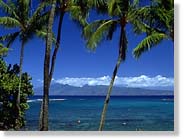
 Hawaii has often been described as paradise on
earth. There are miles of beautiful beaches and thousands of acres of dense forests; there
are many species of plants and animals that exist here but nowhere else on earth. All of
this beauty has made Hawaii, and in particular the island of Maui, a very popular vacation and tourist destination.
Unfortunately, the increase in human involvement in Maui’s ecosystem is starting to
have disastrous consequences. North Beach, Maui is facing several different environmental
problems (such as the destruction of wilderness areas and water shortages) due to the
presence of humans. Since this is a human problem there must be certain characteristics of
the residents (and visitors) of Maui that affect the manner in which they interact with
their environment. The sheer number, age, ethnic and religious background, and the
employment status of the people will play a role in how they create and solve their
environmental problems.
Hawaii has often been described as paradise on
earth. There are miles of beautiful beaches and thousands of acres of dense forests; there
are many species of plants and animals that exist here but nowhere else on earth. All of
this beauty has made Hawaii, and in particular the island of Maui, a very popular vacation and tourist destination.
Unfortunately, the increase in human involvement in Maui’s ecosystem is starting to
have disastrous consequences. North Beach, Maui is facing several different environmental
problems (such as the destruction of wilderness areas and water shortages) due to the
presence of humans. Since this is a human problem there must be certain characteristics of
the residents (and visitors) of Maui that affect the manner in which they interact with
their environment. The sheer number, age, ethnic and religious background, and the
employment status of the people will play a role in how they create and solve their
environmental problems.
Population
Age Distribution
Ethnic Background and Religion
Employment
Real Estate and Land Development
Population
There are two aspects to the population
of Maui. The first number to consider is the total population of Maui County, which is
115,955 residents, and happens to be 10 percent of Hawaii state's total population and is
the third largest population in Hawaii. Another important factor to consider is the
population of Maui County , including the visitors which was 153,200 for 1995, making it
the most visited county of the Hawaiian chain. The population of the actual island of Maui
is 90 percent of the county’s total population, or 104,359 residents. Maui’s
population has tripled since 1970, showing significant growth over the last 27 years.
There are four major population centers on the island, and
those are in order of highest population: Central Maui, Upcountry, South Maui, and West
Maui. These population centers are around ten miles apart from each other and separated by
wilderness. Out of the Hawaii chain, Maui is the most visited. Even though West Maui is
the least populated among the four centers, it receives the highest amount of tourists.
The actual number of tourists a day varies, but during peak tourism months, the daily
tourist population can reach up to 40,000 in West Maui. This tourist population can have a
significant negative impact on West Maui’s natural resource base.
Age
Distribution
The age
of the residents of Maui may be an important factor when trying to discern the elements
that contribute to the problems facing North Beach and Maui. The age distribution of the
residents on the island of Maui is similar to the national age distribution.
The age distribution of Maui as of 1996 is as follows:
| Age |
Residents |
Percent |
| 0-5 |
7,846 |
7.5% |
| 6-15 |
16,412 |
15.7% |
| 16-24 |
11,182 |
10.7% |
| 25-34 |
16,121 |
15.4% |
| 35-44 |
19,462 |
18.6% |
| 45-54 |
9,970 |
9.5% |
| 55-64 |
7,967 |
7.6% |
| 65-74 |
6,520 |
6.2% |
| 75-84 |
7,889 |
7.5% |
| 85-100 |
991 |
0.9% |
The senior citizen population of Maui is 11.3% of the total
population, and 16% of the population are minors. How might these age groups contribute to
the environmental problems facing Maui? It could be hard to determine, but there may exist
cohort differences that indicate how each group interacts with the environment. It could
be that the young are more negligible in their recreational activities and tend to disrupt
the natural workings of the environment; whereas, the older population does little to
affect the environment. Conversely, it could be the youth that are the champions of the
environment, and the older population which has not yet realized the importance of
environmental awareness. Lastly, there exists the possibility that it there is a
combination of the older and younger population working together to solve or cause the
environmental problems.
Seventy-five percent of the residents of Maui are of legal
voting age (whereas the 74% of the US population is of voting age). This implies that if
the residents are united in their political views they could have strong political power.
However, if the residents of Maui lack unity in their beliefs about environmental
awareness or a large number of the population chooses not to vote, one of their strongest
tools for change and reform may go unused.
Sixty-one percent of the population is of legal
working age (64% of the US population is of working age). As will be explained later, much
of the employment on the island of Maui is becoming increasingly difficult to find. With
such a large segment of the population competing for jobs, the environmental issues may
tend to be not as pressing as the economic factors facing a majority of the population.
This could result in more attention being paid to the short term economic concerns and
less attention being paid to long term environmental issues.
Ethnic
Background and Religion
In the 1980's, there was a stable balance of ethnic makeup
in Maui. Included in this balance were Native Hawaiians, Americans of Japanese ancestry,
and White Americans. But immigration from the mainland states such as California and
immigration of Japanese people changed the balance. By 1990, 40% of Maui’s population
was white.
In 1995, the breakdown of ethnicity was 42% White, 19%
Filipino, 18% Japanese, 14% Hawaiian, 2% Chinese, and 5% Other (Bisignani, 1995). Because
of the influx of immigrants and also a large number of marriages between ethnic lines, it
is becoming more difficult to assign people to a single ethnic group.
Today, there are about 1,000 Hawaiians left on Maui
(Bisignani, 1995). These Native Hawaiians have a cultural and religious motive to save sacred sites both on
North Beach and on other places throughout Maui. The Native Hawaiian religion is
polytheistic, with the gods of nature being the main focus of worship. The supreme power
of 'aina, the land, is regarded very highly, as is the mana, the power of the rocks and
stones. These gods are only two examples of the ways in which Native Hawaiians worship
their surroundings; in fact, all of nature is important to them. Therefore, it is only
natural that they would want to preserve nature--preserving nature is, in essence,
preserving their culture. It is questionable, however, whether or not these Native
Hawaiians can stand up to the other 103,000 residents who do not have a cultural and
religious link to the land. Only time and effects on the environment will show us whether
or not culture can win over economics, technology, and industrialization.
Employment
Maui has done a great deal to diversify its economy in
recent years in order to create opportunities to encourage its citizens to remain on the
island. Depending mainly on its whaling industry at one time, Maui has since introduced
agriculture, tourism, and technologies to the island. For the County of Maui,
which includes Maui, two other inhabited islands, and one uninhabited island, as of 1992
retail business (i.e. general merchandise stores, food stores, gas stations, furniture and
clothing stores, etc..) claimed the largest number of establishments (1097) and brought in
the greatest amount of money ($1,325 million) in sales. Services (i.e. hotels, motels,
business services, amusements, health and legal services, etc..) followed with 880
establishments and $918 million in sales and then wholesale (i.e. merchant and other
wholesalers) with 192 establishments and $512 million in sales.
It normally takes two jobs to meet the living expenses on
Maui since the pay rates are usually lower than elsewhere (the islanders refer to this as
a "paradise tax" or the price of living in such a beautiful place).
Median incomes in Hawaii have also fallen by over 3% in 1996 to about $43,000 per family.
Meanwhile, the average American family income rose by 2% to about $35,500. The number of
islanders below the poverty line has also been increasing from about 9% to 11.2%.
Jobs have always been easy to find on Maui, especially with
the large number of tourists who visit the island creating several jobs in the service
industry. However, things have been changing over the past five years. There are still a
great deal of tourists, but the industry has not been creating any new jobs.
Tourism
In 1959 and 1960, with the arrival of statehood and
jet airliners to the islands, Maui was altered immensely. From 1960 to 1990, Maui’s
new tourist
industry experienced 30 years of growth--the visitor population rising from zero to
2.4 million a year by 1989 for Maui County. Tourism was suddenly halted by the Persian
Gulf War which affected the economies of Japan and California, Maui’s two main
sources of support for tourism. Now, Maui is entering another growth period in its tourist
industry, however, it is only moderate growth and is not expected to return to the high
growth rates of previous years. Regardless, Maui still draws more tourists than any of the
other Hawaiian islands combined. The success lies in the great variety Maui offers to
tourists from luxury resorts, to shopping, to hiking and beaches. The Japanese are
still the main source of visitors, but Maui also attracts many Californians and retirees
from all over the mainland, especially from the cold weather states.
With the boom in tourism, accommodations were needed to meet
the needs of the visitors. Hotels were built, creating several jobs in construction and
hotel maintenance. In 1995, 66,200 people were employed by the tourist industry. First
class resorts used to have as many employees as guest rooms. Maui’s hotels are ranked
top in the state and occupancy still exceeds any area in the state except for Waikiki, but
now hotels are doing more with fewer employees. There are still many jobs related to
tourism in restaurants, condominiums, and island tours, but the hotel boom has ended.
Hotel
construction is no longer needed, leaving construction workers scrambling for the few
remaining projects.
Agriculture
Despite the rise in tourism, Maui has managed to preserve
more of its original plantation
economy than the rest of the state. The island has been blessed with rich soil and
fertile slopes of dormant volcanoes for farming and ranching. Sugar and pineapple
production were the main economic activities of the island from 1870 to 1960. While not
the main source of income anymore, sugar and pineapple still remain important. More than
half of Hawaii’s sugar comes from the Hawaii Commercial & Sugar Co., a 37,000
acre plantation on Maui. Furthermore, the nation’s last canner of pineapple is the
Maui Pineapple Co. Coffee, vegetable farming, tropical flowers, herbs, and ranching are
also important to the agriculture of Maui.
plantation
economy than the rest of the state. The island has been blessed with rich soil and
fertile slopes of dormant volcanoes for farming and ranching. Sugar and pineapple
production were the main economic activities of the island from 1870 to 1960. While not
the main source of income anymore, sugar and pineapple still remain important. More than
half of Hawaii’s sugar comes from the Hawaii Commercial & Sugar Co., a 37,000
acre plantation on Maui. Furthermore, the nation’s last canner of pineapple is the
Maui Pineapple Co. Coffee, vegetable farming, tropical flowers, herbs, and ranching are
also important to the agriculture of Maui.
With the increase in competition from low-wage foreign
producers, Hawaiians have had to improve the efficiency of their agricultural production
in order to reduce the costs of inputs and increase profits. Efficient drip irrigation,
cultivators, and computerized processing has made Maui’s sugar and pineapple
producers the most efficient in the world. However, it has also reduced the number of
employees needed in agriculture.
Technologies
Since 1981, Maui has been working on improving technology on
the island. Mountain tops have been used to build telescopes for astronomers and the Maui
High Performance Computing Center which is one of the world’s most powerful parallel
processing computers was built recently. Efforts have also been made to further diversify
the economy in order to broaden the range of employment opportunities.
The largest source of new jobs in the past two years has
been chain retailers. The government is the second largest employment sector. The Kahului
Airport, which is state run, employs several--if it were to be considered a single
business, it would be the largest on the island. Transportation, communication, and
utilities are the next largest employment sector followed by finance, insurance, and real
estate; then construction; and finally agriculture. Islanders are now attempting to start
a four year college on the island to create even more quality jobs.
Real
Estate and Land Development
Maui offers three forms of real estate:
single family homes, condominiums, and residential lots (for more than one family). From
1995 to 1996, the resale of single family homes was up 28%. The choice now for home buyers
on Maui has been to buy a new house with less land, or, for the same price, buy an older
house (15-20 yrs. old) with more land. Condominium sales have been down. In terms of
property taxes for Maui County, resorts pay the highest property tax. In 1996, the county
collected over $72 million worth of property taxes from resorts, making property tax the
largest source of revenue for the island government.
Although tourism and real estate contribute to the
island’s economic success, islanders have been extremely careful when it comes to
developing. The state motto is "the life of the land is perpetuated in
righteousness." The islanders have tried to live up to the motto by respecting the
land and trying to preserve the environment. They realize that part of the draw to Maui
which makes it a world class tourist spot is its natural beauty.
Less than 10% of Maui County land is owned by small and
private landowners, thus, preventing the quick selling and developing of the land without
researching the impacts. Maui’s landowners have been trying to address many of the
concerns that residents have brought forth in their attempt to preserve Maui’s
beauty. The landowners realize that they must work with the local communities because
these communities will in turn support their businesses. However, at the same time,
landowners are trying to respond to the construction and building trades that need jobs
for their workers and their own need to make a profit off developed land. With all the
concerns taken into consideration, projects take a long time to plan and change comes
slowly to Maui.
Amfac, the company which owns the properties that make up
Kaanapali’s resort community of hotels, as well as agricultural lands, has discovered
the problems of developing on Maui. They have had plans to develop on West Maui resort
properties at North Beach. However, their plans have been halted by concerns of the
residents and there is no sign of future development at the time.
With the hotel boom over and tourism growth rates slowing,
it is unlikely that Maui really needs another resort on North Beach. However, with the
lack of new jobs in the tourist industry, construction, and agriculture, a new hotel would
provide several jobs for people. It would also further the revenue brought into the
government for property taxes. On the other hand, with Maui’s attempts to diversify
its economy and provide job opportunities in other fields, the jobs in the new resort
might not be as appealing to the islanders. Furthermore, if the islanders do not agree
with the destruction of the land, they might not care to support the hotel by working
there. It seems as if Maui will have its hands full trying to plan the project while
maintaining an ecological
balance at North Beach.
 This examination of the demographics of Maui serves to reinforce the argument that the
characteristics of a human population affects how the population will interact with the
environment. Several issues such as population number, age, ethnic background, and
employment will all function in how the population will work to solve the problems it has
created. For the sake of North Beach and the island of Maui, the human population must now
work together diligently to save it’s greatest resource--a clean and vibrant
environment.
This examination of the demographics of Maui serves to reinforce the argument that the
characteristics of a human population affects how the population will interact with the
environment. Several issues such as population number, age, ethnic background, and
employment will all function in how the population will work to solve the problems it has
created. For the sake of North Beach and the island of Maui, the human population must now
work together diligently to save it’s greatest resource--a clean and vibrant
environment.
Reference
J.D. Bisignani, (1995). Hawaii Book. Chico: Moon Publications.
Back to Top
Back To Psy 412 Home Page
Psy 412 Miami
University. Last revised: . This document has been accessed times since July 15,
1997. Comments & Questions to R. Sherman .
Also See: Social Psychology at
Miami University