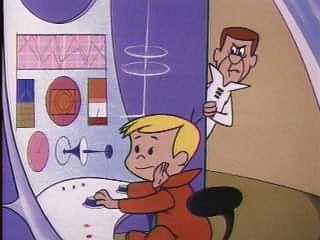
The Cyber-Struggle Between Parents and Children
The old saying “children should be seen and not heard” progressed. People started recognizing children as human beings with a unique perspective on the world. More ears opened up to the voices of the younger generation which advanced the concept of children self-expressing themselves. This started with the litany of finger-painted artwork on the refrigerator. However, with the rapid developments in computer technology, the refrigerator gallery can almost be considered obsolete. Children are instead expressing themselves via graphics on video display terminals. Children create colorful short stories facilitated by Power Point with Clip Art illustration. Some children even have personal webpages complete with pictures scanned at home. With this new technology comes new social problems. Instead of the limited few gathered around the refrigerator, a personal website can be seen by the entire world. While parents have always struggled with the communication styles and parenting roles to play, cyberspace has not made the job of a parent any easier. The degree of a child’s responsible usage of computer technology is dependent upon the parenting style adopted and communicated to him/her.

 The Cyber-Struggle
Between Parents and Children by Julie Carvey
The Cyber-Struggle
Between Parents and Children by Julie Carvey
| Cyber-struggle Opening Page | The Instinct to Protect Our Young | Balancing Parental Control |
| Freeing the Computer Savvy Cyber-Children | Building Family Cyber-Values | Sources Cited |
 From the
Flinstones to the Jetsons:
From the
Flinstones to the Jetsons:
How Technology is Sprocketing the American Family
into the New Millennium
| PROJECT HOME PAGE | Child-Parent Dynamics in the CyberAge by Michael Johnson |
| Gender Roles in Cyberspace by Leslie Simon | Computer and Internet
Demographics by Jason Stewart |
This project was produced for Psy 380, Social Psychology of Cyberspace, Spring 1999, at Miami University. All graphics in these pages are used with permission or under fair use guidelines, are in the public domain, or were created by the authors. Last revised: . This document has been accessed times since 1 May 1999. Comments & Questions to R. Sherman